Cost Guide: Commercial Warehouse Cleaning Prices in Melbourne and Metro Victoria (2026 Rates)
This comprehensive guide outlines the latest 2026 pricing expectations for warehouse cleaning Melbourne businesses and facilities across Metro Victoria. It covers common pricing models, typical rate ranges, factors that influence cost, sample estimates, and practical tips for getting an accurate quote. The figures below are drawn from current industry trends (2025–2026) and operator pricing commonly observed across Melbourne and surrounding suburbs.
Why accurate pricing matters for warehouses
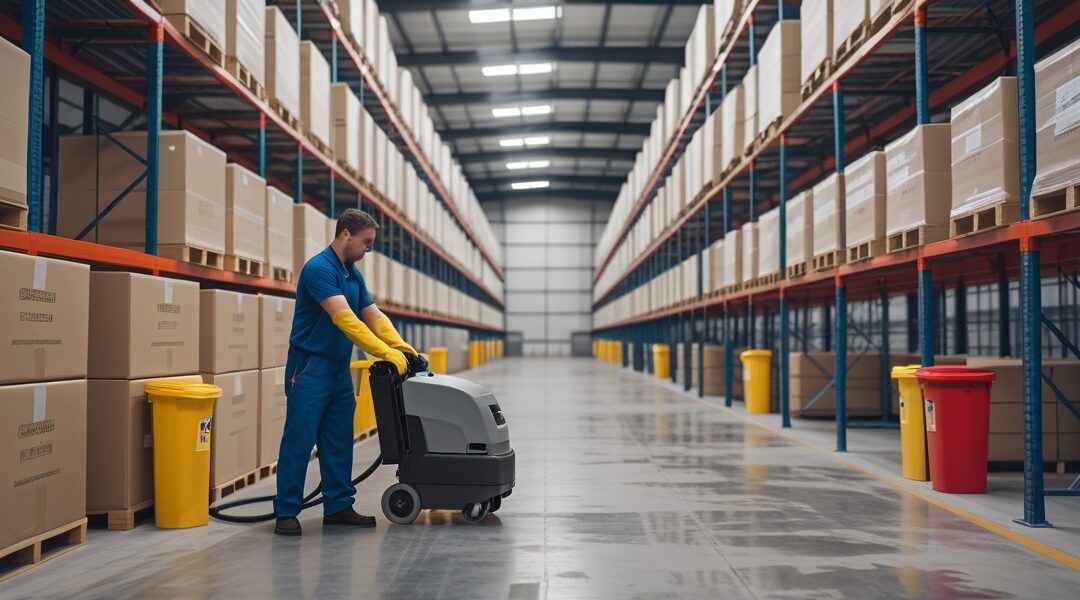
Commercial warehouses have very different cleaning needs from offices: large floor areas, racking systems, forklift traffic, spill management, and specialised floor or high-reach work. Knowing typical costs helps facility managers budget correctly, choose the right service frequency, and compare quotes fairly.
Primary pricing models used by cleaning companies
Most professional cleaners price warehouse work using one or more of the following models. Understanding each helps you interpret quotes:
- Hourly rate (per cleaner) — Common when labour is the main cost (e.g. general tidying, rubbish removal, basic sweeping). Rates reflect skill level, equipment and travel time.
- Per square metre (per sqm) — Typical for larger floor areas where area correlates to time and consumables used (e.g. sweeping, mop/wash, degreasing).
- Fixed per visit — A single fee for recurring scheduled cleans (weekly/fortnightly/monthly) that bundles labour and basic materials.
- Project or deep-clean pricing — One-off deep cleans, floor scrubbing/restoration, or high-level racking cleaning are quoted as discrete projects, often with higher equipment costs.
- Contract/retainer pricing — Ongoing agreements (weekly/daily) that typically offer a discount compared with one-off visits.
Typical 2026 rate ranges for commercial warehouse cleaning prices
Rates vary across Melbourne CBD, inner suburbs and Metro Victoria due to labour costs, travel and local demand. The ranges below reflect the 2025–2026 market with a modest upward pressure from labour awards and supply-chain costs.
- Hourly rates (per cleaner): $45 – $100 per hour. Standard general cleaning tends to sit between $45–$70/hr; specialised industrial or after-hours high-risk cleaning can reach $80–$100/hr.
- Per square metre: $2.00 – $8.00 per sqm. Typical ongoing warehouse maintenance often falls between $2.00–$6.00/sqm depending on soil level and service scope.
- Fixed per visit (small to medium warehouses): $150 – $1,200 per visit depending on size, frequency and tasks included.
- Deep cleans / specialised services (floor scrubbing, degreasing, high-reach, medical/food-safe cleans): from $600 up to several thousand dollars for large sites or multi-level racking.
- Contract discounts: Regular weekly or daily contracts commonly reduce the per-visit cost by 10–25% versus ad-hoc pricing.
Regional differences across Melbourne and Metro Victoria
Expect a location premium for CBD and inner-city works; outer suburban and regional sites are often cheaper but may incur travel fees or minimum-call charges.
- Melbourne CBD & inner suburbs — +10–20% on average compared with outer suburbs due to higher labour and operating costs.
- Inner Metro (Richmond, Southbank, Docklands, Port Melbourne) — Slight premium but better access to specialist providers.
- Outer Metro & regional Victoria — Competitive rates but watch for minimum charge and travel time loading.
Key factors that influence warehouse cleaning Melbourne prices
Understanding these variables will help you evaluate quotes fairly and identify where cost savings are possible.
- Warehouse size and layout — Total sqm and whether the floor is open-plan or dense with racking affects time-on-task.
- Soil level and industry type — Food-packaging or chemical warehouses require stricter processes and may cost more due to compliance and specialised detergents.
- Service frequency — Daily or multiple-times-per-week services reduce per-visit cost; occasional deep cleans cost more.
- Required equipment — Ride-on scrubbers, high-reach lifts or steam equipment incur hire or capital costs passed onto clients for one-off projects.
- Access and hours — After-hours work attracts penalty or travel loadings; constrained access (narrow aisles, security checks) increases time.
- Specialist tasks — High-level racking cleaning, pest-control coordination, industrial degreasing and hazardous spill remediation are premium services.
- Compliance and insurance — Suppliers with WHS systems, public liability and specialised industry accreditations often charge higher rates but reduce operational risk.
Sample cost scenarios and quick estimates (2026)
These examples are indicative. Use them to set expectations before inviting formal quotes.
- Small urban warehouse — 500 sqm, weekly general clean
Likely cost: $2.50–$4.50/sqm per visit = $1,250–$2,250/month (weekly visits). Per hour equivalent depends on cleaners assigned; often 1–2 cleaners for 1–2 hours.
- Medium warehouse — 2,000 sqm, twice-weekly maintenance
Likely cost: $2.00–$4.00/sqm per visit. Typical monthly spend: $6,400–$16,000 depending on service scope and equipment use.
- Large distribution centre — 10,000 sqm, nightly cleaning with floor scrub
Likely cost: $1.50–$3.50/sqm for routine tasks with additional $600–$2,500 per month for ride-on scrubber hire/maintenance. Monthly cost often ranges tens of thousands depending on number of shifts.
- One-off deep clean & degrease (medium site)
Single project: $800–$5,000+ depending on soil level, PPE, equipment and access height.
How to get accurate quotes — checklist
When seeking quotes for commercial warehouse cleaning prices, use the checklist below to ensure apples-to-apples comparisons.
- Provide exact floor area (sqm) and site layout plans where possible.
- List required tasks (sweeping, bin removal, degreasing, floor scrubbing, high-level racking wipe, window cleaning, bathroom servicing).
- State the desired frequency (daily, nightly, weekly, fortnightly, monthly).
- Declare operating hours and any after-hours access restrictions.
- Ask for a breakdown: labour, consumables, equipment hire, and any travel or minimum-call charges.
- Confirm insurance, WHS policy and whether subcontractors will be used.
- Request references for similar warehouse work and examples of safety procedures (including forklift-safe cleaning and racking access).
Tips to reduce ongoing cleaning costs
Smart procurement and small operational changes can reduce your cleaning bill without sacrificing standards.
- Consolidate waste and recycling points to reduce labour time spent collecting rubbish.
- Schedule regular maintenance floor cleaning to avoid expensive deep cleans.
- Use durable mats and entry controls to reduce tracked-in dirt.
- Negotiate contract length and frequency for volume discounts.
- Bundle additional services (e.g. floor scrubbing at a scheduled frequency) to lower per-visit costs.
Choosing the right cleaning partner in Melbourne
When comparing suppliers, evaluate safety credentials, equipment, industry experience and communication as much as price. An experienced industrial cleaning team often saves money over time by reducing downtime, preventing contamination or asset damage, and improving WHS compliance.
For a professional starting point and an obligation-free quote from a local Melbourne provider, consider contacting reputable commercial cleaners with specific warehouse expertise. One recognised local provider for broader commercial cleaning services in the city can be found here: commercial cleaning Melbourne. This link is provided as an example of the type of service provider to approach when sourcing formal proposals.
For additional industry perspectives and operational tips you can review regional cleaning-industry content, such as the resource here: Bonus Building Care blog.
Common add-on services and typical premiums
Expect additional charges for:
- High-reach racking cleaning (requires lifts or specialist gear): +25–100% on standard hourly rates.
- Floor restoration, burnishing or coating: quoted per project ($1,500–$10,000+ depending on area and surface type).
- Hazardous spill or contaminated waste management: higher rates and strict WHS compliance.
- After-hours or emergency call-outs: penalty loadings (often 25–75% depending on timing).
How labour and regulatory changes affect 2026 prices
Key drivers pushing prices moderately higher into 2026 include:
- Wage and award adjustments — Cleaning industry award movements and minimum wage changes flow into hourly rates and contractor pricing.
- Equipment and supply costs — Ongoing costs for scrubbers, PPE and eco-friendly cleaning agents.
- Insurance and compliance — Higher public liability and compliance monitoring for industrial works.
Red flags when selecting a warehouse cleaner
Avoid suppliers who:
- Provide verbal quotes only — always ask for a written scope and pricing breakdown.
- Offer prices far below market without clear trade-offs — this often signals inexperienced staff or hidden charges later.
- Cannot demonstrate WHS systems or appropriate insurance for industrial work.
- Are vague about equipment or refuse to outline how they will protect racking, goods and machinery during cleaning.
Final checklist before signing a contract
- Confirm included tasks, excluded tasks and response times for additional work.
- Check for indexation or price-review clauses in long-term contracts.
- Require proof of insurance and relevant safety paperwork.
- Agree on KPIs (cleanliness standards, inspection frequency) and reporting format.
- Negotiate start-up inspections and a trial period to validate service performance.
Conclusion — budgeting for 2026
Budget conservatively: for general warehouse maintenance across Melbourne and Metro Victoria, allow an estimated range of $45–$100 per hour for labour or approximately $2–$6 per sqm for regular maintenance, depending on frequency and the complexity of tasks. For deep cleans and specialised projects, expect substantially higher one-off charges. Always request a detailed, written quote that itemises labour, equipment, consumables and travel or minimum-call fees.
If you need an immediate benchmarking estimate, gather the site sqm, photos of the facility, a list of required tasks and preferred service frequency — then request written quotes from at least three reputable suppliers to compare scope and pricing fairly.
https://shorturl.fm/p4104
https://shorturl.fm/gH1yg
https://shorturl.fm/AGnMp
https://shorturl.fm/bJLHi
https://shorturl.fm/9KQWw
https://shorturl.fm/TMimM
https://shorturl.fm/wDqu4
https://shorturl.fm/Ok2rS
https://shorturl.fm/WYRWK
https://shorturl.fm/0eZ1r
https://shorturl.fm/916AE
https://shorturl.fm/WxpAD
https://shorturl.fm/peViR
https://shorturl.fm/mHgHH
https://shorturl.fm/en4Vd
Strendus Casino, hmm… Never tried it myself, but I’ve got a buddy who plays there sometimes. He says it’s alright, a good place to kill some time. Maybe I’ll give it a go sometime too. Explore it here: strenduscasino
Strendus, yeah, it’s a well-known name around here. Seems pretty reliable from what I’ve gathered. Lots of folks seem to enjoy it, so it must be doing something right. Why not give it shot? Visit their website here: strendus
Rey Lucky Casino, sounds intriguing. Haven’t heard much about it, but that King Lucky vibe is pretty appealing. I’d probably recommend checking it out. See if it’s your lucky day. Explore it here: reyluckycasino
https://shorturl.fm/nV9an
https://shorturl.fm/urDAX
https://shorturl.fm/Mto6A
Enter your invite code to earn your airdrop on Aster https://is.gd/ZceEI6
Enter your invite code to earn your airdrop on Aster https://is.gd/ZceEI6
Claim Your Exclusive Bonus on AsterDEX https://is.gd/CGTnqR
I will right away snatch your rss feed as I can’t find your e-mail subscription link or newsletter service. Do you have any? Please allow me realize in order that I may just subscribe. Thanks.
Fast indexing of website pages and backlinks on Google https://is.gd/r7kPlC
Ahaa, its nice discussion concerning this post here at this website, I have read all that, so at this time me also commenting here.
Fast indexing of website pages and backlinks on Google https://is.gd/r7kPlC
Become our partner and turn referrals into revenue—join now!
Share our products, earn up to 40% per sale—apply today!
Refer friends, earn cash—sign up now!
Hiya! I know this is kinda off topic however I’d figured I’d ask.
Would you be interested in trading links or maybe guest
writing a blog post or vice-versa? My website covers a lot
of the same subjects as yours and I think we could greatly benefit from each other.
If you happen to be interested feel free to send me an e-mail.
I look forward to hearing from you! Superb blog by the way! https://meds24.sbs/
Unlock exclusive rewards with every referral—apply to our affiliate program now!
Get rewarded for every recommendation—join our affiliate network!
Turn referrals into revenue—sign up for our affiliate program today!
Promote our brand and get paid—enroll in our affiliate program!
Hello there! I simply wish to offer you a big thumbs up for the great info you have here on this post. I am returning to your blog for more soon.
Refer and earn up to 50% commission—join now!
Join our affiliate community and start earning instantly!
Unlock exclusive rewards with every referral—apply to our affiliate program now!
Turn your traffic into cash—join our affiliate program!
Join our affiliate community and maximize your profits—sign up now!
Start profiting from your network—sign up today!
Become our partner and turn clicks into cash—join the affiliate program today!
Become our affiliate and watch your wallet grow—apply now!
Join our affiliate community and start earning instantly!
Partner with us for generous payouts—sign up today!
Start profiting from your network—sign up today!
Have you ever thought about including a little
bit more than just your articles? I mean, what
you say is valuable and all. However imagine if you added some great visuals or video clips to give your posts more, “pop”!
Your content is excellent but with pics and clips, this website could undeniably be one of
the greatest in its field. Wonderful blog! https://truepharm.org/
Turn traffic into cash—apply to our affiliate program today!
Share your unique link and earn up to 40% commission!
Get paid for every referral—enroll in our affiliate program!
wzysqtc cialis dapoxetine overnight shipping canada bqsiixs
Refer friends, earn cash—sign up now!
Refer friends, earn cash—sign up now!
Maximize your income with our high-converting offers—join as an affiliate!
Refer friends and colleagues—get paid for every signup!
Share our products, reap the rewards—apply to our affiliate program!
These are really wonderful ideas in regarding blogging. You have touched some good things here. Any way keep up wrinting.
Maximize your income with our high-converting offers—join as an affiliate!
Ahaa, its nice dialogue about this article at this place at this weblog, I have read all that, so now me also commenting at this place.
Your audience, your profits—become an affiliate today!
Turn your traffic into cash—join our affiliate program!
Everyone loves what you guys are up too. This sort of clever work and coverage! Keep up the good works guys I’ve added you guys to our blogroll.
Share our products, earn up to 40% per sale—apply today!
Greetings! I’ve been reading your weblog for a while now and finally got the courage to go ahead and give you a shout out from New Caney Texas! Just wanted to mention keep up the excellent job!
Turn your audience into earnings—become an affiliate partner today!
Grow your income stream—apply to our affiliate program today!
Zero Nicotine Vapes offer smooth, flavorful clouds without nicotine, delivering vibrant taste, rich aroma, and consistent performance for a satisfying, enjoyable, and guilt-free vaping experience anytime, anywhere.
Get paid for every click—join our affiliate network now!
Ahaa, its pleasant conversation on the topic of this article here at this web site, I have read all that, so now me also commenting at this place.
Sign up now and access top-converting affiliate offers!
Monetize your audience—become an affiliate partner now!
Start earning on every sale—become our affiliate partner today!
Promote, refer, earn—join our affiliate program now!
Promote, refer, earn—join our affiliate program now!
Unlock exclusive rewards with every referral—apply to our affiliate program now!
Join our affiliate community and maximize your profits—sign up now!
Earn recurring commissions with each referral—enroll today!
Sign up for our affiliate program and watch your earnings grow!
Share your link and rake in rewards—join our affiliate team!
Become our affiliate—tap into unlimited earning potential!
Refer friends, collect commissions—sign up now!
Join our affiliate family and watch your profits soar—sign up today!
Earn up to 40% commission per sale—join our affiliate program now!
Get paid for every referral—sign up for our affiliate program now!
Ahaa, its good conversation regarding this post here at this blog, I have read all that, so now me also commenting at this place.
Promote our brand and get paid—enroll in our affiliate program!
Earn passive income with every click—sign up today!
Way cool! Some very valid points! I appreciate you penning this post and also the rest of the website is also really good.
Become our affiliate—tap into unlimited earning potential!
Hello everyone, it’s my first visit at this web site, and post is actually fruitful for me, keep up posting these articles.
Join our affiliate program today and start earning up to 30% commission—sign up now!
My mom mentioned to assist you on the date written piece on her behalf write exactly about %BT%. I’m considering vast web day-n-night however it haven’t observed many details. Along with please identify whole lot?
That’s a great point about the psychology of chance! It’s fascinating how platforms like jl55 ph online casino tap into that, offering competitive thrills beyond just simple luck – almost like a digital arena! Definitely adds another layer of fun.
Earn passive income with every click—sign up today!
I love what you guys tend to be up too. This type of clever work and coverage! Keep up the superb works guys I’ve included you guys to my personal blogroll.
Greetings! Very helpful advice in this particular article! It’s the little changes that make the biggest changes. Thanks a lot for sharing!
Drive sales, earn big—enroll in our affiliate program!
Turn referrals into revenue—sign up for our affiliate program today!
I’ve had some good luck at Luckyclub87! They seem to have a good range of different games. If you’re looking for a new site, check out luckyclub87!
Hey, heard about yes3patti555download! Thinking of giving it a shot. Anyone tried it out yet? What’s your take? Thinking of downloading from yes3patti555download
Yo, is lucky100gamedownload legit? Seen some ads and the games look kinda fun, but I wanna know if it’s a good platform before I download. Check it out here: lucky100gamedownload.
Way cool! Some extremely valid points! I appreciate you writing this article and the rest of the site is very good.
Monetize your audience with our high-converting offers—apply today!
Monetize your audience—become an affiliate partner now!
Join our affiliate program and start earning commissions today—sign up now!
Partner with us for generous payouts—sign up today!
I’ll right away snatch your rss feed as I can not in finding your e-mail subscription link or e-newsletter service. Do you have any? Please allow me know so that I may subscribe. Thanks.
I simply couldn’t go away your web site prior to suggesting that I extremely enjoyed the usual info an individual supply on your visitors? Is going to be back often in order to check up on new posts
Join our affiliate program today and earn generous commissions!
Rattling nice layout and fantastic content material, hardly anything else we want :D.
Ahaa, its nice discussion on the topic of this post at this place at this website, I have read all that, so at this time me also commenting here.
Way cool! Some very valid points! I appreciate you penning this article and also the rest of the site is very good.
Start sharing, start earning—become our affiliate today!
It’s very straightforward to find out any topic on net as compared to textbooks, as I found this article at this web page.
I want to to thank you for this excellent read!! I certainly enjoyed every bit of it. I have you book-marked to look at new things you
This is a topic which is near to my heart… Thank you! Exactly where are your contact details though?
Sign up for our affiliate program and watch your earnings grow!
Start earning on autopilot—become our affiliate partner!
Sign up for our affiliate program and watch your earnings grow!
Start earning passive income—become our affiliate partner!
Become our partner and turn referrals into revenue—join now!
Join our affiliate program today and earn generous commissions!
Join our affiliate program today and start earning up to 30% commission—sign up now!
Turn your traffic into cash—join our affiliate program!
Be rewarded for every click—join our affiliate program today!
ремонт 2 квартири вартість зробити ремонт квартири
Refer customers, collect commissions—join our affiliate program!
ремонту квартири рулону шпалер капітальний ремонт квартири
Turn your audience into earnings—become an affiliate partner today!
Share our offers and watch your wallet grow—become an affiliate!
Found a bride? https://propose.lol romantic scenarios, beautiful locations, photo shoots, decor, and surprises for the perfect declaration of love. Make your engagement in Barcelona an unforgettable moment in your story.
Проблемы с застройщиком? неустойка за просрочку квартиры по дду помощь юриста по долевому строительству, расчет неустойки, подготовка претензии и подача иска в суд. Защитим права дольщиков и поможем получить компенсацию.
Нужен юрист? судебная защита в арбитражном суде представительство в арбитражном суде, защита интересов бизнеса, взыскание задолженности, споры по договорам и сопровождение судебных процессов для компаний и предпринимателей.
Проблемы с застройщиком? https://vzyskanie-ddu.ru помощь юриста по долевому строительству, расчет неустойки, подготовка претензии и подача иска в суд. Защитим права дольщиков и поможем получить компенсацию.
Нужен юрист? арбитражный юрист москва представительство в арбитражном суде, защита интересов бизнеса, взыскание задолженности, споры по договорам и сопровождение судебных процессов для компаний и предпринимателей.
Ищешь кран? краны под сварку для трубопроводов различного назначения. Надежная запорная арматура для систем водоснабжения, отопления, газа и промышленных магистралей. Высокая герметичность, долговечность и устойчивость к нагрузкам.