
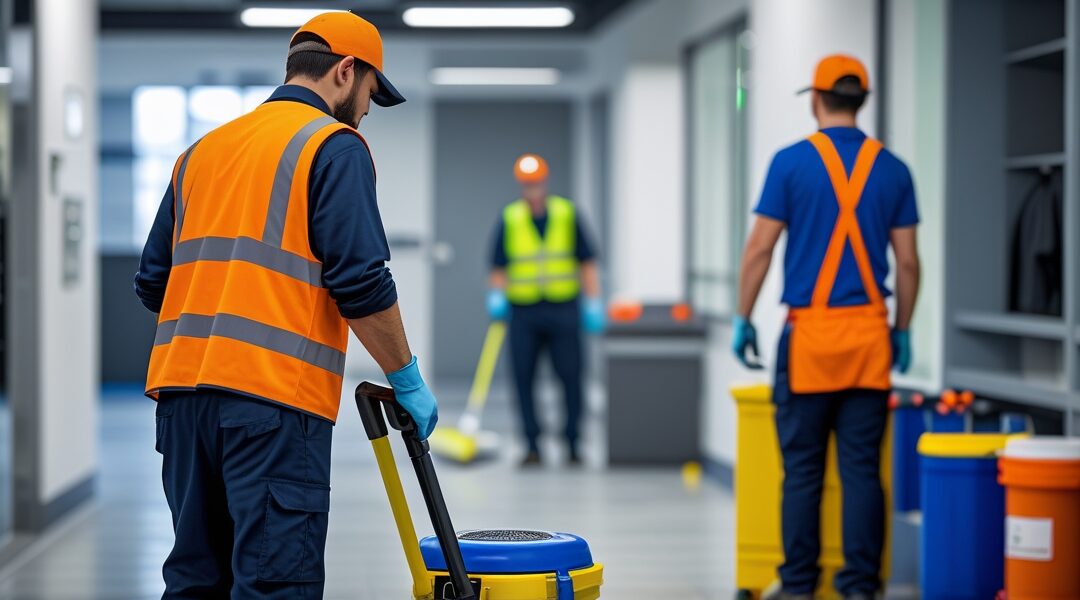
Real-Time Activity Monitoring for Commercial Cleaning in Victoria
Practical guidance, technologies, compliance, costs, KPIs and implementation steps for facilities managers, cleaning contractors and workplace health & safety teams across Victoria.
Why real-time monitoring matters for commercial cleaning in Victoria
Facilities today demand accountability, measurable outcomes and the ability to respond quickly to spillages, high-traffic contamination points and changing occupancy. Real-Time Activity Monitoring combines sensors, tracking and cleaning management apps to provide near-instant verification that work has been completed, to trigger rapid responses to incidents, and to optimise labour and chemicals usage across commercial sites in Victoria.
Organisations implementing monitoring report improved compliance with WHS obligations, reduced customer complaints, better-managed supply consumption and data that supports continuous improvement.
Core technologies used
The following technologies are central to modern systems deployed across Victorian commercial sites:
- Bluetooth Low Energy (BLE) beacons — ideal for indoor verification. Beacons placed at toilets, kitchens and entry points automatically register cleaner presence via a mobile app without repeated QR scans.
- GPS trackers — effective for tracking mobile teams and vehicles outdoors, and for large campus sites; typically used in a hybrid model together with BLE for indoor coverage.
- Cleaning management apps — allocate tasks, log completed checklists, attach photos, and provide timestamps and geolocation/proximity records. These apps form the user interface for supervisors and clients.
- Environmental IoT sensors — monitor air quality, occupancy, humidity, bin-fill status and surface-contact events; can trigger cleaning requests automatically when thresholds are exceeded.
- AI and robotics — autonomous scrubbers and vacuum robots integrated with scheduling systems to perform routine floor maintenance during low-occupancy windows.
- Cloud dashboards and analytics — aggregate verification logs, generate compliance reports, and enable performance benchmarking across sites and teams.
Regulatory and compliance landscape in Victoria
Victoria implements the national work health and safety (WHS) framework modelled by Safe Work Australia and enforced locally by WorkSafe Victoria. For cleaning operations this means:
- Maintaining safe systems of work and documented Safe Work Method Statements (SWMS) where applicable.
- Controlling hazards such as slips, chemical exposure and manual handling, and ensuring use of appropriate PPE.
- Following disinfection and cleaning guidance—particularly for high-touch surfaces—and keeping records that demonstrate compliance and due diligence.
- Consulting with workers on hazards and control measures and providing adequate training for equipment and technology used onsite.
Real-time monitoring supports these obligations by creating auditable records of cleaning tasks, timestamps, and staff presence that demonstrate reasonable steps have been taken to manage risks.
Practical benefits for Victorian commercial cleaning operations
- Verified compliance and audit readiness — digital logs replace inconsistent paper forms and manual sign-offs.
- Faster incident response — sensors and mobile alerts reduce response time to spills, overfilled bins or unexpected occupancy surges.
- Operational optimisation — data-driven scheduling reduces wasted labour by cleaning on demand (triggered by sensors) rather than on fixed, inefficient cycles.
- Improved client transparency — real-time dashboards and reports reassure tenants or clients about cleaning frequency and standards.
- Better asset management — track equipment usage and location, reducing loss and maintenance downtime.
Common challenges and mitigation
While the advantages are clear, several practical challenges arise when deploying real-time activity monitoring:
- Indoor localisation accuracy — GPS accuracy is poor indoors; use BLE beacons, Wi-Fi triangulation or hybrid systems to ensure reliable proximity detection.
- Signal infrastructure — thick concrete, lift shafts and plant rooms create dead zones. Mitigation: site survey and strategic beacon/gateway placement plus redundancy.
- User adoption — staff may resist apps or new workflows. Mitigation: simple UX, hands-on training, and phased rollouts with champions.
- Integration complexity — connecting sensors, payroll, rostering and procurement systems can be demanding. Mitigation: prioritise core integrations first (roster, incident reporting, invoicing) and use APIs.
- Cost vs ROI — initial hardware and platform costs must be justified by efficiencies. Mitigation: pilot in high-traffic or high-risk sites to quantify benefits prior to wider rollout.
Implementation roadmap (step-by-step)
A practical rollout plan for a mid-sized Victorian office or retail centre:
- Site assessment — map traffic flows, high-touch zones and asset locations. Identify regulatory requirements that apply.
- Define success metrics — choose KPIs such as average response time to incidents, auto-check-in rate, reduction in overtime, and client satisfaction.
- Choose technology stack — select BLE beacons + cleaning app, environmental sensors (bin fill, air quality), and a cloud dashboard that supports CSV/API exports for reporting.
- Pilot deployment — implement in one building or a cluster of high-need zones for 6–12 weeks to measure impact and gather user feedback.
- Train teams and document processes — update SWMS and training materials to include the monitoring technology and data handling procedures.
- Scale & integrate — rollout to additional sites and integrate with rostering/payroll and facilities management systems once the pilot demonstrates ROI.
- Continuous improvement — use analytics to reallocate cleaning frequency, update schedules and refine sensor thresholds.
Key performance indicators (KPIs) to track
Measure and monitor these KPIs to prove value and drive decision-making:
- Auto-check-in rate — proportion of cleaning events verified automatically via beacons vs manual sign-off.
- Average response time — elapsed time from incident alert (spill/bin overflow) to arrival and remediation.
- Cleaning coverage — percentage of scheduled tasks completed within target windows.
- Client satisfaction — tenant or stakeholder feedback and complaint rates.
- Resource utilisation — hours per cleaning event and chemical consumption per square metre.
- Cost per sqm — total cleaning cost broken down and benchmarked after implementation.
Cost considerations and budgeting
Budget lines to include when preparing a business case:
- Hardware — beacons, gateways, environmental sensors, and any vehicle GPS trackers.
- Software — subscription fees for cleaning management platforms and analytics dashboards.
- Integration & deployment — initial installation, site surveys and systems integration.
- Training & change management — time and resources to train staff and revise documentation.
- Support & maintenance — ongoing device replacement, battery changes and software support.
Typical approaches to contain cost include starting with a focused pilot (2–3 high-traffic zones) and moving to a subscription model to spread platform costs over time. ROI is often realised through reduced overtime, fewer complaints and supply savings within 9–18 months for well-managed sites.
Privacy and data security — what Victorian organisations must consider
Monitoring staff and site activity raises privacy and data-protection issues. Key considerations include:
- Collect the minimum data required for operational purposes (avoid continuous location logging where proximity verification suffices).
- Be transparent with employees and contractors about what is collected, why, and how long records are retained. Update workplace policies and obtain consent where required.
- Secure data in transit and at rest — ensure platforms use strong encryption, role-based access controls and regular security reviews.
- Comply with Australian privacy obligations regarding personal information and with any contractual confidentiality requirements from clients.
Design systems to store event-level verification (time, beacon ID, task completed) without capturing unnecessary continuous tracking to reduce privacy risk and maintain trust with staff.
Case studies and Victorian examples
Across Victoria, operators have moved from paper-based checks to mixed-sensor systems. Common deployments include:
- Retail centres placing BLE beacons in bathrooms and food courts to automatically verify cleanings during trading hours, reducing customer complaints and improving incident response times.
- Corporate office towers integrating occupancy sensors to trigger additional high-touch surface cleaning during peak occupancy periods, improving tenant confidence and reducing infection risk.
- Large campus facilities using GPS for outdoor grounds crews and BLE for indoor teams, with a single dashboard combining both datasets for scheduling optimisation.
If you are evaluating commercial cleaning partners in Melbourne, consider suppliers who demonstrate technology integrations and who can provide pilot data. For example, a specialised office cleaning provider with local experience may combine practical site knowledge with technology to deliver outcomes for building owners and tenants: office cleaning Melbourne.
For additional reading on cleaning operations and digital transformation in other markets, a comparative resource is available here: https://www.cleaningservicenewyorkcity.com/blog/
Vendors and products commonly used in Australia (not exhaustive)
When selecting suppliers, look for local support and proven integrations. Notable technology categories and representative vendors include:
- BLE beacon & asset IoT vendors — providers offering long-life beacons and indoor location services.
- Environmental sensor platforms — companies with LoRaWAN, NB-IoT or BLE sensor ecosystems for bin fill, occupancy and air quality monitoring.
- Cleaning management software — mobile apps with verification, photo evidence, checklists and cloud dashboards.
- Robotics & automation vendors — suppliers of autonomous floor-care machines that integrate with scheduling systems.
Choose vendors who can demonstrate real deployments in commercial properties and who provide references, security documentation and a tested device replacement/maintenance plan.
Latest innovations (as at January 2026)
Recent innovations shaping the market include:
- Hybrid localisation solutions combining BLE, UWB and Wi‑Fi fingerprinting for centimetre-level indoor accuracy where required.
- Edge analytics running in gateways to reduce cloud dependency and accelerate alerts without excessive data transmission.
- Autonomous cleaning robots collaborating with human teams via shared schedules and occupancy-aware routing.
- Predictive cleaning models that use occupancy and event data (meetings, footfall) to forecast demand and pre-allocate resources.
- Privacy-preserving verification techniques that publish task completion events without retaining detailed personal movement histories.
Checklist: Is your site ready for real-time monitoring?
- Have you mapped high-traffic and high-touch areas that require prioritised monitoring?
- Do you have documented SWMS and WHS procedures that can be updated to reference the new technology?
- Can your budget accommodate a pilot and one year of platform subscription fees?
- Are stakeholders (cleaners, supervisors, tenants) prepared for change and informed on privacy protections?
- Have you identified KPIs to measure pilot success (response times, verification rate, complaints reduction)?
https://shorturl.fm/MYhGW
https://shorturl.fm/lng13
https://shorturl.fm/kQLY9
https://shorturl.fm/06p6c
https://shorturl.fm/nbIxS
https://shorturl.fm/QeaUY
https://shorturl.fm/gaUcW
https://shorturl.fm/fZR82
https://shorturl.fm/gAyD7
https://shorturl.fm/AVEJM
https://shorturl.fm/S3TcA
https://shorturl.fm/nbJVT
https://shorturl.fm/nbJVT
https://shorturl.fm/gdqTm
https://shorturl.fm/MJOHq
https://shorturl.fm/JDvJf
https://shorturl.fm/JUKgS
It’s smart to prioritize secure platforms when exploring online casinos – compliance & verification are key! Seeing sites like JoinNow PH focus on that for Filipino players is reassuring. Check out the joinnow ph app download for a streamlined, secure experience – responsible gaming first, always!
https://shorturl.fm/RXwfr
I will right away seize your rss feed as I can’t in finding your e-mail subscription link or e-newsletter service. Do you’ve any? Kindly allow me understand in order that I may subscribe. Thanks.
Everyone loves what you guys are up too. This type of clever work and exposure! Keep up the terrific works guys I’ve incorporated you guys to my personal blogroll.
Earn your airdrop on Aster https://is.gd/ZceEI6
Enter your invite code to earn your airdrop on Aster https://is.gd/ZceEI6
Earn your airdrop on Aster https://is.gd/ZceEI6
Earn your airdrop on Aster https://is.gd/ZceEI6
Claim Your Exclusive Bonus on AsterDEX https://is.gd/CGTnqR
Fast indexing of website pages and backlinks on Google https://is.gd/r7kPlC
Hi, I do believe this is an excellent blog. I stumbledupon it 😉 I am going to revisit once again since I saved as a favorite it. Money and freedom is the best way to change, may you be rich and continue to help others.
Fast indexing of website pages and backlinks on Google https://is.gd/r7kPlC
Boost your profits with our affiliate program—apply today!
Greetings! Very helpful advice in this particular post! It’s the little changes that will make the biggest changes. Thanks a lot for sharing!
Start earning every time someone clicks—join now!
Greetings! Very helpful advice in this particular post! It’s the little changes that make the biggest changes. Thanks a lot for sharing!
Earn up to 40% commission per sale—join our affiliate program now!
Wow, this article is nice, my younger sister is analyzing these things, thus I am going to let know her.
Hello https://is.gd/tvHMGJ
Hi https://is.gd/9PLRLO
Hi https://is.gd/9PLRLO
Wow, this post is pleasant, my younger sister is analyzing these kinds of things, therefore I am going to let know her.
Ahaa, its fastidious discussion on the topic of this piece of writing at this place at this web site, I have read all that, so at this time me also commenting at this place.
Refer friends, collect commissions—sign up now!
Hi, I do think this is an excellent website. I stumbledupon it 😉 I may come back once again since i have bookmarked it. Money and freedom is the best way to change, may you be rich and continue to help other people.
Share our offers and watch your wallet grow—become an affiliate!
Earn passive income on autopilot—become our affiliate!
Join our affiliate program and start earning commissions today—sign up now!
Turn referrals into revenue—sign up for our affiliate program today!
Start earning on autopilot—become our affiliate partner!
Promote our products and earn real money—apply today!
Share our link, earn real money—signup for our affiliate program!
Sign up for our affiliate program and watch your earnings grow!
Turn your audience into earnings—become an affiliate partner today!
Share your link and rake in rewards—join our affiliate team!
Drive sales, earn big—enroll in our affiliate program!
Join our affiliate community and maximize your profits—sign up now!
Partner with us and enjoy recurring commission payouts!
This indie horror gem is a must-play for fans of psychological thrillers! With its atmospheric storytelling and chilling sound design, bound to the dark world truly immerses you in its unsettling narrative. Prepare for a truly terrifying and unforgettable experience that will keep you on the edge of your seat.
Earn passive income with every click—sign up today!
Partner with us for high-paying affiliate deals—join now!
Your audience, your profits—become an affiliate today!
Share your unique link and earn up to 40% commission!
Partner with us for generous payouts—sign up today!
Join our affiliate program and start earning commissions today—sign up now!
Earn up to 40% commission per sale—join our affiliate program now!
Unlock exclusive rewards with every referral—apply to our affiliate program now!
I will immediately take hold of your rss feed as I can not to find your e-mail subscription hyperlink or e-newsletter service. Do you have any? Kindly let me understand so that I could subscribe. Thanks.
Tap into unlimited earnings—sign up for our affiliate program!
Earn big by sharing our offers—become an affiliate today!
Your influence, your income—join our affiliate network today!
Get paid for every click—join our affiliate network now!
Start profiting from your traffic—sign up today!
Join our affiliate program today and earn generous commissions!
Share your link and rake in rewards—join our affiliate team!
Share your link and rake in rewards—join our affiliate team!
Unlock exclusive rewards with every referral—enroll now!
Your influence, your income—join our affiliate network today!
Apply now and unlock exclusive affiliate rewards!
Get paid for every referral—sign up for our affiliate program now!
Unlock exclusive rewards with every referral—enroll now!
Tap into a new revenue stream—become an affiliate partner!
Turn your audience into earnings—become an affiliate partner today!
Drive sales, collect commissions—join our affiliate team!
Tap into unlimited earning potential—become our affiliate partner!
Share your link and rake in rewards—join our affiliate team!
Unlock exclusive rewards with every referral—apply to our affiliate program now!
Apply now and receive dedicated support for affiliates!
Share your link and rake in rewards—join our affiliate team!
Earn recurring commissions with each referral—enroll today!
Start profiting from your network—sign up today!
Maximize your earnings with top-tier offers—apply now!
Start sharing, start earning—become our affiliate today!
Start earning instantly—become our affiliate and earn on every sale!
Join our affiliate community and maximize your profits—sign up now!
Start earning passive income—join our affiliate network today!
Promote our brand and get paid—enroll in our affiliate program!
Way cool! Some extremely valid points! I appreciate you writing this post and also the rest of the site is also very good.
I’ll immediately take hold of your rss as I can not to find your e-mail subscription link or e-newsletter service. Do you’ve any? Please let me know in order that I could subscribe. Thanks.
Maximize your earnings with top-tier offers—apply now!
Greetings! Very useful advice in this particular article! It is the little changes that will make the largest changes. Thanks for sharing!
Earn big by sharing our offers—become an affiliate today!
Promote our brand and get paid—enroll in our affiliate program!
Share our products and watch your earnings grow—join our affiliate program!
Promote our products and earn real money—apply today!
Drive sales, collect commissions—join our affiliate team!
Turn referrals into revenue—sign up for our affiliate program today!
Sign up for our affiliate program and watch your earnings grow!
If you might have been enjoying fairly some time to CSR Racing 2 you will discover rather a lot to love in Table Top Racing Premium, as a result of they have lots of features in widespread: racing, racer and car.
Drive sales, earn big—enroll in our affiliate program!
Refer friends, earn cash—sign up now!
Boost your income effortlessly—join our affiliate network now!
Monetize your audience—become an affiliate partner now!
I’ll right away clutch your rss feed as I can’t in finding your e-mail subscription hyperlink or e-newsletter service. Do you have any? Kindly permit me realize in order that I could subscribe. Thanks.
Join our affiliate program and watch your earnings skyrocket—sign up now!
Refer friends, earn cash—sign up now!
Get paid for every referral—sign up for our affiliate program now!
I want to to thank you for this fantastic read!! I definitely enjoyed every little bit of it. I have you saved as a favorite to check out new things you
Earn passive income with every click—sign up today!
Unlock exclusive rewards with every referral—apply to our affiliate program now!
Get rewarded for every recommendation—join our affiliate network!
Join our affiliate program and start earning today—sign up now!
Apply now and receive dedicated support for affiliates!
Start earning instantly—become our affiliate and earn on every sale!
There is certainly a lot to find out about this issue. I really like all the points you made.
I am sure this article has touched all the internet visitors, its really really pleasant article on building up new weblog.
Drive sales, collect commissions—join our affiliate team!
Boost your profits with our affiliate program—apply today!
Way cool! Some very valid points! I appreciate you penning this article and the rest of the site is extremely good.
Be rewarded for every click—join our affiliate program today!
Turn your audience into earnings—become an affiliate partner today!
Your audience, your profits—become an affiliate today!
Partner with us and earn recurring commissions—join the affiliate program!
Join forces with us and profit from every click!
Apply now and receive dedicated support for affiliates!
Unlock exclusive rewards with every referral—enroll now!
Refer and earn up to 50% commission—join now!
Become our partner and turn referrals into revenue—join now!
Boost your profits with our affiliate program—apply today!
Earn passive income on autopilot—become our affiliate!
Partner with us and earn recurring commissions—join the affiliate program!
Partner with us and earn recurring commissions—join the affiliate program!
Tap into unlimited earnings—sign up for our affiliate program!
Join our affiliate community and start earning instantly!
Start sharing, start earning—become our affiliate today!
вартість ремонту квартири 1 ремонт квартир Львів
квартира без ремонту скільки коштує ремонт квартири
ремонт квартири які послуги скільки коштує ремонт квартири
Ahaa, its pleasant discussion regarding this article at this place
at this blog, I have read all that, so at this time me
also commenting at this place. https://tumblr.com/seoquantum
Unlock top-tier commissions—become our affiliate partner now!
Turn traffic into cash—apply to our affiliate program today!
Monetize your audience with our high-converting offers—apply today!
Found a bride? wedding proposal in Barcelona romantic scenarios, beautiful locations, photo shoots, decor, and surprises for the perfect declaration of love. Make your engagement in Barcelona an unforgettable moment in your story.
Found a bride? proposal in barcelona romantic scenarios, beautiful locations, photo shoots, decor, and surprises for the perfect declaration of love. Make your engagement in Barcelona an unforgettable moment in your story.
Found a bride? best places to propose in Barcelona romantic scenarios, beautiful locations, photo shoots, decor, and surprises for the perfect declaration of love. Make your engagement in Barcelona an unforgettable moment in your story.
Проблемы с застройщиком? взыскать неустойку с застройщика дду помощь юриста по долевому строительству, расчет неустойки, подготовка претензии и подача иска в суд. Защитим права дольщиков и поможем получить компенсацию.
Нужен юрист? юридическая защита в арбитражном суде представительство в арбитражном суде, защита интересов бизнеса, взыскание задолженности, споры по договорам и сопровождение судебных процессов для компаний и предпринимателей.
Проблемы с застройщиком? юристы расторжение дду помощь юриста по долевому строительству, расчет неустойки, подготовка претензии и подача иска в суд. Защитим права дольщиков и поможем получить компенсацию.
Проблемы с застройщиком? юрист по дду помощь юриста по долевому строительству, расчет неустойки, подготовка претензии и подача иска в суд. Защитим права дольщиков и поможем получить компенсацию.
Нужен юрист? https://arbitrazhnyy-yurist.ru представительство в арбитражном суде, защита интересов бизнеса, взыскание задолженности, споры по договорам и сопровождение судебных процессов для компаний и предпринимателей.
Нужен юрист? https://arbitrazhnyy-yurist.ru представительство в арбитражном суде, защита интересов бизнеса, взыскание задолженности, споры по договорам и сопровождение судебных процессов для компаний и предпринимателей.
Нужен юрист? помощь арбитражного адвоката представительство в арбитражном суде, защита интересов бизнеса, взыскание задолженности, споры по договорам и сопровождение судебных процессов для компаний и предпринимателей.
Ищешь кран? краны под сварку для трубопроводов различного назначения. Надежная запорная арматура для систем водоснабжения, отопления, газа и промышленных магистралей. Высокая герметичность, долговечность и устойчивость к нагрузкам.
Ищешь кран? кран под сварку для трубопроводов различного назначения. Надежная запорная арматура для систем водоснабжения, отопления, газа и промышленных магистралей. Высокая герметичность, долговечность и устойчивость к нагрузкам.
Ищешь кран? шаровые краны под приварку для трубопроводов различного назначения. Надежная запорная арматура для систем водоснабжения, отопления, газа и промышленных магистралей. Высокая герметичность, долговечность и устойчивость к нагрузкам.
Ищешь кран? кран под приварку для трубопроводов различного назначения. Надежная запорная арматура для систем водоснабжения, отопления, газа и промышленных магистралей. Высокая герметичность, долговечность и устойчивость к нагрузкам.
женские ароматы духов https://elicebeauty.com/parfyumeriya/filter/_m194_m238/
парфюмерия отзывы https://elicebeauty.com/parfyumeriya/filter/_m94_m196/
Monetize your audience with our high-converting offers—apply today!
Join our affiliate program today and earn generous commissions!