Cost & Schedule: Commercial Carpet Cleaning Contracts Melbourne
This guide explains everything facility managers, property managers and business owners in Melbourne need to know about commercial carpet cleaning contracts — from typical costs and pricing models to scheduling, contract terms, compliance and current trends (2024–2025). It combines industry benchmarks and practical advice so you can put together a cost-effective, compliant cleaning program for your workplace.
Why a formal commercial carpet cleaning contract matters
Carpets are one of the largest ongoing maintenance expenses in commercial premises. A written contract ensures consistent standards, manages expectations, and protects both parties on matters such as scheduling, pricing, insurance and workplace health and safety (WHS). Well-drafted contracts also help prolong carpet life, reduce operational disruption and control long-term costs.
Quick benchmark summary (Melbourne, 2024–2025)
Below are consolidated industry benchmarks useful for initial budgeting. These are aggregated from multiple Australian commercial cleaning sources and market intelligence during 2024–2025.
- Hourly labour rates: typically A$38–A$65 per cleaner/hour for general commercial cleaning tasks.
- General commercial cleaning (per sqm): ~A$2.50–A$7.50 per sqm depending on frequency and site complexity.
- Carpet-specific rates: common ranges are A$2.25–A$7.00 per sqm for carpet cleaning; steam (hot water extraction) often quoted A$3–A$6 per sqm for offices.
- Small office jobs: under 100 sqm — typically A$100–A$350 per clean (one-off or occasional).
- Medium offices (100–500 sqm): A$250–A$700 per visit, depending on scope and frequency.
- Large sites (500+ sqm): A$700–A$2,000+ per visit for deeper cleans or bundled services.
Common pricing models used in Melbourne
Contract pricing usually adopts one of the following approaches. Choose the model that best fits your operational priorities and ease of contract management.
- Per square metre (per sqm)
Great for larger, consistent floor areas (e.g. open-plan offices). Carpet cleaning is commonly priced per sqm for steam extraction or dry cleaning. Recurring contracts usually include tiered discounts for volume.
- Per hour
Useful where access, movement between rooms, or ad-hoc work is significant. Hourly rates are typically A$38–A$65 per cleaner/hour in Melbourne and are suited to mixed-task visits (vacuuming, spot treatment, immediate response).
- Per visit / flat rate
Fixed price per visit for a defined scope (e.g. weekly or monthly). This simplifies invoicing and budgeting but must clearly define inclusions/exclusions.
- Bundled / monthly contract
Monthly billing for a bundle of services (routine cleaning plus scheduled carpet extraction X times per year). This model supports predictable cashflow and reduces per-visit costs.
- Task-based pricing
Specific add-ons (e.g. stain removal, odour treatment, protective coatings) charged separately. Useful where carpets require occasional specialist interventions.
Factors that influence cost
Understanding what drives price helps you negotiate a better contract and avoid surprises. Major cost drivers include:
- Carpet type and fibre — wool, nylon, and loop pile carpets respond differently to cleaning; wool often needs gentler processes and can cost more.
- Soiling level & stain complexity — heavy traffic areas or embedded stains require longer treatment and sometimes specialised chemicals or techniques.
- Traffic and usage patterns — reception and meeting rooms often need more frequent care than back-of-house areas.
- Access & layout — multiple small rooms, staircases, or restricted access (after hours only) increases labour time and cost.
- Scheduling time — after-hours and weekend work typically attract a premium (commonly 10%–30% surcharge depending on provider).
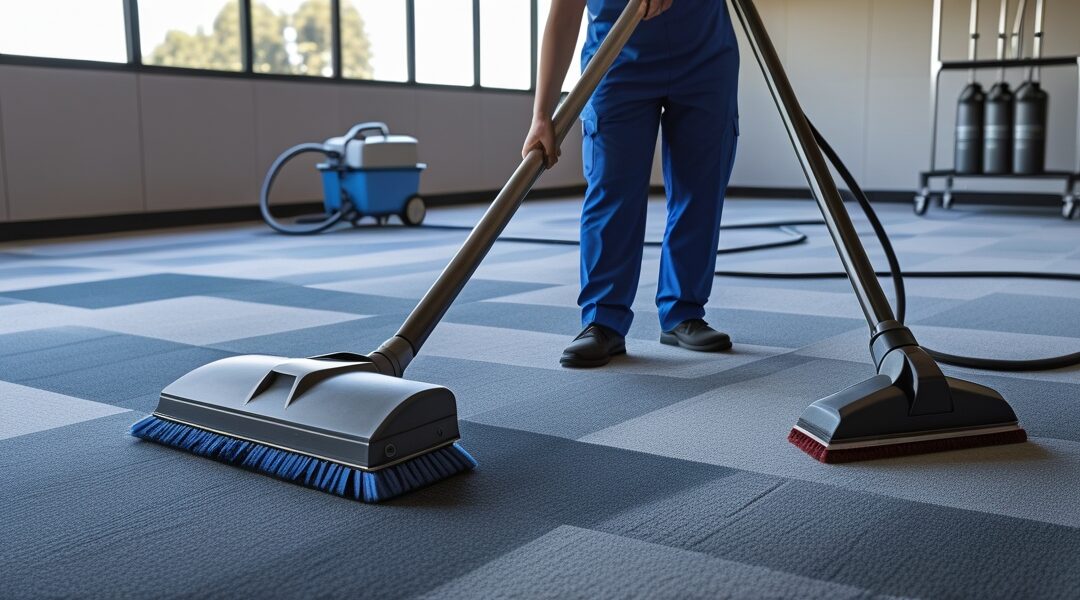
- Equipment & method — hot water extraction (steam) needs specialised truck-mounted or portable equipment; low-moisture dry systems need different machinery and consumables.
- Eco/green products and certifications — biodegradable, low-VOC products or certified green processes can be slightly more expensive but often sought by corporate and government clients.
- Frequency & contract length — higher frequency contracts (weekly/fortnightly) typically reduce the per-visit/metre cost versus occasional cleans.
- Local labour market — inner-city Melbourne labour shortages in certain periods (2024–2025) have put upward pressure on rates.
Scheduling best-practices for commercial carpet cleaning
Cleaning schedules should balance business operations, carpet maintenance needs and cost-efficiency. Common practices include:
- Frequency matching usage: High-traffic areas (e.g. reception, corridors) — weekly to monthly vacuuming, and steam extraction 2–4 times per year. Low-traffic areas — quarterly to biannual deep cleans.
- After-hours vs daytime: After-hours (overnight or weekends) reduces disruption and allows for longer drying times. Daytime cleaning is possible for scheduled, contained areas or when quick-dry systems are used.
- Planned deep-clean windows: Quarterly or biannual deep cleans scheduled during low-business periods (public holidays, long weekends) minimise impact.
- Reactive spot cleaning: Fast-response spot treatment for spills or odours reduces the need for costly deep cleans later.
- Integrated maintenance calendars: Combine routine vacuuming, periodic steam extraction and carpet protection applications into one contract to reduce admin and cost.
Typical contract terms, duration & notice periods
Standard contract features you should expect when negotiating:
- Contract length: 12 months is common; two-year terms with periodic performance reviews are also used. Longer terms sometimes attract reduced rates.
- Notice periods: 30–90 days for termination by either party is typical. Tender documents and public sector contracts may specify longer or more formal notice obligations.
- Service Level Agreement (SLA): Clearly defined KPIs such as response times for emergency spills, frequency of deep cleans, acceptable carpet appearance standards and reporting cadence.
- Variation clauses: Mechanisms to adjust pricing for CPI, labour cost changes or scope changes are standard — ensure they are transparent and capped where possible.
- Inclusions & exclusions: List specific services (vacuuming, spot treatment, steam extraction, stain removal, deodorising) and what triggers extra charges.
Insurance, compliance and WHS considerations
Working with commercial clients in Melbourne requires clear safety and compliance documentation. Contracts should require suppliers to maintain:
- Public liability insurance — typically ranging from A$10M depending on client requirements.
- Workers compensation and evidence of payroll compliance for subcontractors.
- WHS/OHS policies — provider must demonstrate risk assessments for chemical use, electrical equipment, manual handling and work in confined spaces.
- Police checks / background screening — often required for secure sites, childcare, aged care or government buildings.
- Traffic management and access permits where truck-mounted equipment or large teams are deployed on-site.
Steam vs dry/low-moisture cleaning — cost and suitability
Both methods are used across Melbourne commercial sites. Key considerations:
- Hot water extraction (steam): Deep clean, removes embedded soils and sanitises; typical price A$3–A$6 per sqm for offices. Drying times can be several hours so after-hours scheduling is common.
- Low-moisture/dry systems: Faster return-to-service and shorter drying times; useful for time-sensitive areas, but may not remove embedded soils as effectively as steam. Pricing varies similarly but can be marginally higher for specialised equipment.
- Decision factors: Choose steam for scheduled deep cleans and heavily soiled areas; low-moisture for short-turnaround cleans or sensitive equipment areas (data centres).
Current trends affecting cost & scheduling (2024–2025)
Recent market dynamics in Melbourne that influence contract pricing and scheduling include:
- Green cleaning demand: Growing interest in low-VOC, biodegradable products and environmental certification. Some corporate and public sector contracts now specify green cleaning standards.
- Hybrid work patterns: Reduced weekday office occupancy in many businesses has shifted some cleaning from daily to flexible or needs-based scheduling. This reduces routine cleaning volumes but increases the importance of targeted deep cleans.
- Labour shortages & wage pressure: Competition for workers (hospitality, logistics) has pushed hourly rates up in some periods, affecting labour-heavy services like carpet cleaning.
- Inflation & supply chain impact: Chemical and equipment costs have experienced modest inflation resulting in periodic contract price adjustments tied to CPI or specific indices.
- Sanitisation expectations: Even post-pandemic, clients continue to demand higher hygiene standards, particularly in high-touch zones; carpet cleaning now often includes antimicrobial or sanitising treatments as optional extras.
How to tender or negotiate a cost-effective contract
When issuing an RFP or negotiating, follow these steps to secure value without sacrificing performance:
- Define your scope precisely: List areas, carpet types, frequency, and expectations for spot vs full extraction.
- Ask for multiple pricing options: Per sqm, per hour and a bundled monthly option to compare on like-for-like bases.
- Require SLAs and reporting: Include KPIs for cleanliness, response times for incidents, and a schedule for deep cleans.
- Specify compliance requirements: Insurance minimums, WHS documentation, staff checks and environmental product preferences.
- Seek trial periods: A short trial or initial probation (e.g. 3 months) allows performance assessment before long-term commitment.
- Negotiate variation caps: If escalation clauses exist (CPI, fuel or chemical costs), cap increases where possible or tie them to a transparent index.
Estimating budgets — worked examples
Below are three practical examples to help you estimate costings for Melbourne commercial premises. These are representative benchmarks and will vary with supplier, geography and exact site conditions.
- Small professional suite — 80 sqm (reception, 2 offices):
Routine vacuuming weekly; steam extraction biannually.
- Weekly vacuuming (per visit): ~A$80–A$150
- Steam extraction (biannual): ~A$240–A$480 per deep clean (A$3–A$6/sqm)
- Annual budget estimate: A$4,160–A$7,000 (depending on supplier and add-ons)
- Medium open-plan office — 350 sqm:
Daily light cleaning, weekly vacuuming of carpet areas and quarterly steam extraction.
- Weekly vacuum (per visit): A$200–A$450
- Quarterly steam extraction: A$1,050–A$2,100 per clean
- Annual budget estimate: A$15,000–A$30,000 (depending on frequency and extras)
- Large corporate floor — 1,200 sqm:
Frequent vacuuming, targeted spot treatment, biannual full steam extraction using truck-mounted systems.
- Per steam extraction visit: A$3,600–A$7,200 (A$3–A$6/sqm)
- Weekly maintenance visits: A$600–A$1,200 per week
- Annual budget estimate: A$60,000+ depending on after-hours premiums and specialist services
Add-on services to consider (and cost impact)
Often requested extras that affect contract price:
- Stain and odour removal (charged per incident or per sqm)
- Antimicrobial treatments and sanitisation
- Protective carpet coatings (prolong life and reduce re-soiling)
- Rapid-dry systems for minimal downtime
- Carpet replacement oversight and pre/post-installation cleaning
Practical tips for reducing long‑term carpet cleaning cost
- Implement effective entry matting to reduce soil load — this reduces cleaning frequency and heavy remediation costs.
- Adopt a scheduled maintenance plan (regular vacuuming + periodic deep cleans) — cheaper long-term than reactive only cleaning.
- Use spot-treatment protocols for spills — quick response prevents permanent staining.
- Negotiate multi-site or bundled contracts — volume discounts are common if you manage multiple floors or properties.
Where to find reliable contractors in Melbourne
Use procurement portals and local directories, but make sure tenders request WHS compliance, insurance certificates and evidence of experience with commercial carpet fabrics similar to yours. For more specialised carpet steam work by an experienced commercial provider, consider established local services that publish detailed service pages; for example, specialised pages on carpet steam cleaning services can help you compare methods and equipment.
If you’re assessing providers specifically for carpet steam cleaning Melbourne, review their methods, insurance and SLAs carefully.
For broader industry insights and cleaning-sector trends, vendor blogs and industry publications provide useful commentary and case studies; one such resource that regularly publishes sector analysis is available here: Janiking blog.
Checklist for drafting or reviewing a carpet cleaning contract
- Defined scope of works (rooms, sqm, inclusions/exclusions)
- Pricing model clearly stated (sqm / hourly / per visit / monthly)
- Frequency and scheduling windows (including after-hours if required)
- Performance measures / SLAs and reporting cadence
- Insurance and WHS compliance evidence
- Staff screening / security requirements for sensitive sites
- Contract term, renewal and notice periods (30–90 days typical)
- Variation and escalation clauses (CPI or specific indices)
- Dispute resolution and remediation process
- Quality review and re-tender timing
Final notes — negotiating value without compromising safety
When evaluating bids, don’t select purely on lowest price. A true value assessment compares price, demonstrated capability, WHS practices, references, and environmental credentials. A slightly higher per-visit cost can represent better outcomes through reduced downtime, longer carpet life and fewer emergency interventions.
Use the benchmarks in this guide to short-list providers and request detailed quotes that spell out methods, equipment and environmental practices. With a clearly defined scope, transparent SLAs and appropriate insurance and WHS documentation, you can secure a contract that controls costs while protecting your people and assets.
https://shorturl.fm/FwzOE
https://shorturl.fm/SvHr9
https://shorturl.fm/3Krwo
https://shorturl.fm/sZXSJ
https://shorturl.fm/lOs0v
https://shorturl.fm/2Pt7n
https://shorturl.fm/ekp1X
https://shorturl.fm/Npy96
https://shorturl.fm/Vep9L
https://shorturl.fm/q1tit
https://shorturl.fm/juvn0
https://shorturl.fm/jhA69
https://shorturl.fm/YOxRx
https://shorturl.fm/dA8Ff
https://shorturl.fm/9y3cw
https://shorturl.fm/YYlwM
Betfiery44… that name sounds hot! Let’s hope my winnings catch fire too! Ready to win big! Join the heat at betfiery44!
I am sure this paragraph has touched all the internet users, its really really nice piece of writing on building up new weblog.
https://shorturl.fm/Z5jn1
https://shorturl.fm/0kw3l
https://shorturl.fm/Plldx
https://shorturl.fm/zWQPb
https://shorturl.fm/TOdLZ
https://shorturl.fm/xeU6l
https://shorturl.fm/RMIj3
https://shorturl.fm/GHEbi
https://shorturl.fm/XepRu
https://shorturl.fm/vqKzM
Wow! This blog looks exactly like my old one! It’s on a totally different topic but it has pretty much the same layout and design. Superb choice of colors!
https://shorturl.fm/LL38d
https://shorturl.fm/Yu9a0
https://shorturl.fm/0eZ1r
Greetings! Very useful advice in this particular article! It is the little changes that produce the most significant changes. Thanks for sharing!
https://shorturl.fm/Ai7BS
https://shorturl.fm/33sH7
Another good budget option, the Lexar M20c is the only drive we’ve tested that has both a standard USB plug and a Type-C plug that can be used interchangeably.
Ahaa, its pleasant conversation concerning this post here at this weblog, I have read all that, so now me also commenting here.
https://shorturl.fm/GM1o9
https://shorturl.fm/j6rNr
https://shorturl.fm/d3sHd
Si buscas emoción y buenos juegos, rushbetcasino es el lugar. Tienen de todo, desde tragamonedas hasta juegos de mesa. ¡No te lo pierdas! Checa rushbetcasino.
Animalitomicasino, qué nombre tan peculiar! Pero la verdad es que tienen una buena selección de juegos y una interfaz amigable. Un buen lugar para probar suerte. Entra a animalitomicasino.
Mayapalace suena como un lugar elegante para apostar. Quizás te traiga buena suerte! Visita mayapalace.
https://shorturl.fm/WbBY4
Interesting points! Seeing platforms like joinnow ph slot really prioritize the Filipino player experience with localized options is smart. Accessibility is key for wider adoption, and a smooth interface matters a lot! 🧐
Hello, i think that i saw you visited my blog thus i came to “return the favor”.I’m trying to find things to improve my site!I suppose its ok to use a few of your ideas!!
Superb post but I was wondering if you could write a litte more on this topic? I’d be very grateful if you could elaborate a little bit further. Appreciate it!
These are genuinely great ideas in about blogging. You have touched some good points here. Any way keep up wrinting.
Hi there, I log on to your blogs like every week. Your story-telling style is awesome, keep doing what you’re doing!
Enter your invite code to earn your airdrop on Aster https://is.gd/ZceEI6
Earn your airdrop on Aster https://is.gd/ZceEI6
Enter your invite code to earn your airdrop on Aster https://is.gd/ZceEI6
Special ability to earn $ASTER bonus https://is.gd/CGTnqR
Fast indexing of website pages and backlinks on Google https://is.gd/r7kPlC
Fast indexing of website pages and backlinks on Google https://is.gd/r7kPlC
Hey there! I’ve been reading your blog for a long time now and finally got the courage to go ahead and give you a shout out from Porter Texas! Just wanted to tell you keep up the excellent work!
Start profiting from your network—sign up today!
Apply now and receive dedicated support for affiliates!
I just couldn’t leave your site prior to suggesting that I really enjoyed the usual info a person provide in your guests? Is gonna be back regularly in order to check out new posts
Hi https://is.gd/9PLRLO
I’ll right away take hold of your rss as I can not in finding your e-mail subscription hyperlink or e-newsletter service. Do you’ve any? Kindly let me understand in order that I may subscribe. Thanks.
I really like it whenever people come together and share ideas. Great website, keep it up!
Amazing! This blog looks exactly like my old one! It’s on a totally different topic but it has pretty much the same layout and design. Wonderful choice of colors!
Ahaa, its good conversation on the topic of this article here at this blog, I have read all that, so at this time me also commenting here.
I wanted to thank you for this fantastic read!! I absolutely loved every little bit of it. I’ve got you book marked to check out new stuff you
Partner with us and enjoy high payouts—apply now!
Partner with us and enjoy recurring commission payouts!
Hi, I do believe this is an excellent site. I stumbledupon it 😉 I will revisit once again since I book-marked it. Money and freedom is the greatest way to change, may you be rich and continue to guide others.
Become our partner now and start turning referrals into revenue!
Hi! I could have sworn I’ve visited this web site before but after going through some of the posts I realized it’s new to me. Anyhow, I’m certainly delighted I found it and I’ll be book-marking it and checking back regularly!
Unlock top-tier commissions—become our affiliate partner now!
Start sharing, start earning—become our affiliate today!
Grow your income stream—apply to our affiliate program today!
Start earning on autopilot—become our affiliate partner!
Tap into unlimited earning potential—become our affiliate partner!
Partner with us for high-paying affiliate deals—join now!
Unlock exclusive rewards with every referral—apply to our affiliate program now!
Drive sales, earn commissions—apply now!
Start earning instantly—become our affiliate and earn on every sale!
I’ll immediately grasp your rss as I can not to find your e-mail subscription hyperlink or newsletter service. Do you’ve any? Kindly allow me realize so that I could subscribe. Thanks.
Incredible! This blog looks exactly like my old one! It’s on a totally different topic but it has pretty much the same page layout and design. Wonderful choice of colors!
Refer customers, collect commissions—join our affiliate program!
I love what you guys tend to be up too. This kind of clever work and coverage! Keep up the terrific works guys I’ve added you guys to my blogroll.
Share your link, earn rewards—sign up for our affiliate program!
Get rewarded for every recommendation—join our affiliate network!
Turn traffic into cash—apply to our affiliate program today!
Refer and earn up to 50% commission—join now!
Invite your network, boost your income—sign up for our affiliate program now!
Boost your income—enroll in our affiliate program today!
Currently it seems like Movable Type is the best blogging platform available right now. (from what I’ve read) Is that what you are using on your blog?
These are genuinely fantastic ideas in on the topic of blogging. You have touched some good factors here. Any way keep up wrinting.
Apply now and receive dedicated support for affiliates!
Drive sales, earn commissions—apply now!
Share our products, earn up to 40% per sale—apply today!
Get rewarded for every recommendation—join our affiliate network!
Share our products, reap the rewards—apply to our affiliate program!
Become our partner now and start turning referrals into revenue!
Join our affiliate community and start earning instantly!
Get paid for every referral—enroll in our affiliate program!
Promote our products—get paid for every sale you generate!
Hi, I do think this is a great web site. I stumbledupon it 😉 I am going to revisit once again since I bookmarked it. Money and freedom is the greatest way to change, may you be rich and continue to guide others.
Earn passive income with every click—sign up today!
Ahaa, its nice discussion concerning this post here at this webpage, I have read all that, so at this time me also commenting here.
Apply now and receive dedicated support for affiliates!
Thanks very nice blog!
I am sure this piece of writing has touched all the internet visitors, its really really nice article on building up new webpage.
Share your link, earn rewards—sign up for our affiliate program!
Join our affiliate community and maximize your profits—sign up now!
In other words, these drives can offer fantastic performance in ideal circumstances, but we think the Supersonic Rage 2 is a better high-speed drive for most people.
Great article! We will be linking to this particularly great article on our site. Keep up the great writing.
Unlock exclusive rewards with every referral—apply to our affiliate program now!
Hi to all, the contents existing at this web site are genuinely awesome for people knowledge, well, keep up the good work fellows.
I am sure this piece of writing has touched all the internet users, its really really good article on building up new blog.
Start profiting from your network—sign up today!
I’ll right away take hold of your rss as I can’t find your e-mail subscription link or newsletter service. Do you have any? Kindly allow me understand in order that I may subscribe. Thanks.
Drive sales, collect commissions—join our affiliate team!
Boost your earnings effortlessly—become our affiliate!
Unlock exclusive affiliate perks—register now!
Become our partner and turn clicks into cash—join the affiliate program today!
Turn referrals into revenue—sign up for our affiliate program today!
Share our products, reap the rewards—apply to our affiliate program!
Thanks for the auspicious writeup. It in reality used to be a amusement account it. Look complicated to more brought agreeable from you! However, how could we communicate?
I will immediately snatch your rss feed as I can not in finding your e-mail subscription link or newsletter service. Do you have any? Please permit me know so that I may just subscribe. Thanks.
I love what you guys are usually up too. This sort of clever work and exposure! Keep up the amazing works guys I’ve incorporated you guys to our blogroll.
I am sure this piece of writing has touched all the internet viewers, its really really good article on building up new blog.
I like what you guys tend to be up too. This kind of clever work and coverage! Keep up the excellent works guys I’ve added you guys to my personal blogroll.
I am sure this post has touched all the internet people, its really really fastidious article on building up new website.
Ahaa, its fastidious conversation regarding this article at this place at this web site, I have read all that, so at this time me also commenting at this place.
Ahaa, its fastidious conversation about this post here at this blog, I have read all that, so now me also commenting at this place.
Greetings! Very helpful advice in this particular post! It is the little changes which will make the biggest changes. Thanks for sharing!
I will immediately take hold of your rss as I can’t find your email subscription link or e-newsletter service. Do you’ve any? Kindly permit me understand in order that I may subscribe. Thanks.
Ahaa, its nice conversation regarding this paragraph at this place at this webpage, I have read all that, so now me also commenting here.
I simply could not go away your website before suggesting that I actually loved the usual information an individual supply on your guests? Is gonna be again often to check out new posts
Hey there! I’ve been reading your site for a long time now and finally got the courage to go ahead and give you a shout out from Porter Tx! Just wanted to mention keep up the fantastic work!
Ahaa, its pleasant dialogue on the topic of this paragraph at this place at this webpage, I have read all that, so now me also commenting at this place.
They differ also in their costume for the players to enjoy the Subway Surfers game even more.
Join our affiliate community and start earning instantly!
Monetize your traffic instantly—enroll in our affiliate network!
Publicaciones unicas https://amouranth.es/ noticias de vanguardia y contenido original. Mantengase al dia y no se pierda ninguna novedad.
La pagina oficial de https://evaelfie.es ofrece contenido exclusivo, noticias de ultima hora y actualizaciones periodicas. Mantengase al dia con las nuevas publicaciones y anuncios.
ремонт квартир коштує ремонт квартир
Gaming portal Unblocked Games with free online games. A huge collection of browser games without restrictions: arcades, strategy, racing, logic games, and entertainment for relaxation right in your browser.
MMORPG игра сайт Скрайда — онлайн-мир приключений, сражений и развития персонажа. Выбирайте класс героя, исследуйте локации, участвуйте в PvP и PvE боях, вступайте в гильдии и проходите квесты в захватывающей многопользовательской игре.
Мучает варикоз? клиника варикоза информационный сайт о здоровье вен и лечении варикоза ног: УЗДС диагностика, лечение варикоза, ЭВЛО (лазерное лечение), склеротерапия, восстановление и компрессионный трикотаж. Рекомендации врача, ответы на частые вопросы и профилактика варикоза.
Компания “Маркет Климата” https://market-climata.ru/services/obsluzhivanie-konditsionerov/ предоставляет полный спектр услуг по Техническому обслуживанию кондиционеров в Москве всех марок и моделей.
Today’s Top Stories: pros in your home – where homeowners find reliable roofers and roofing pros find real opportunities
Get paid for every click—join our affiliate network now!
Found a bride? top-rated proposal venues near Barcelona romantic scenarios, beautiful locations, photo shoots, decor, and surprises for the perfect declaration of love. Make your engagement in Barcelona an unforgettable moment in your story.
Проблемы с застройщиком? неустойка по договору дду помощь юриста по долевому строительству, расчет неустойки, подготовка претензии и подача иска в суд. Защитим права дольщиков и поможем получить компенсацию.
Нужен юрист? https://arbitrazhnyy-yurist.ru представительство в арбитражном суде, защита интересов бизнеса, взыскание задолженности, споры по договорам и сопровождение судебных процессов для компаний и предпринимателей.
бренды парфюмерии https://perfumemag.ru/
Ищешь кран? краны шаровые под приварку для трубопроводов различного назначения. Надежная запорная арматура для систем водоснабжения, отопления, газа и промышленных магистралей. Высокая герметичность, долговечность и устойчивость к нагрузкам.
Found a bride? unique proposal ideas with city views in Barcelona romantic scenarios, beautiful locations, photo shoots, decor, and surprises for the perfect declaration of love. Make your engagement in Barcelona an unforgettable moment in your story.
Проблемы с застройщиком? неустойка по дду помощь юриста по долевому строительству, расчет неустойки, подготовка претензии и подача иска в суд. Защитим права дольщиков и поможем получить компенсацию.
Нужен юрист? судебная защита в арбитражном суде представительство в арбитражном суде, защита интересов бизнеса, взыскание задолженности, споры по договорам и сопровождение судебных процессов для компаний и предпринимателей.
All the details at the link: http://job-yell.ru/catalog/stormoff/message-240871
A website https://grand-screen.com for searching and analyzing mobile apps. Compare features, explore reviews, ratings, and capabilities of Android and iOS apps. A convenient catalog helps you quickly find useful services and programs.
Нужен отель? отель белорусская идеальное место для расслабления в центре столицы. Тихий бутик-отель 4* сочетает классический комфорт с современным спа-комплексом. Гостей ждет настоящий отдых: можно посетить бассейн, расслабиться в сауне или заказать индивидуальные программы. Уютные номера и близость к метро делают этот отель со спа в Москве идеальным выбором для романтических и оздоровительных путешествий.
Zamow aluminiowe zadaszenie tarasu https://aluminum-etrrace-canopies.ru
Нужна гостиница? отель на час уютные номера рядом с метро и деловым центром города. Удобное размещение для туристов и деловых поездок, комфортные условия проживания, современный сервис и удобная транспортная доступность.